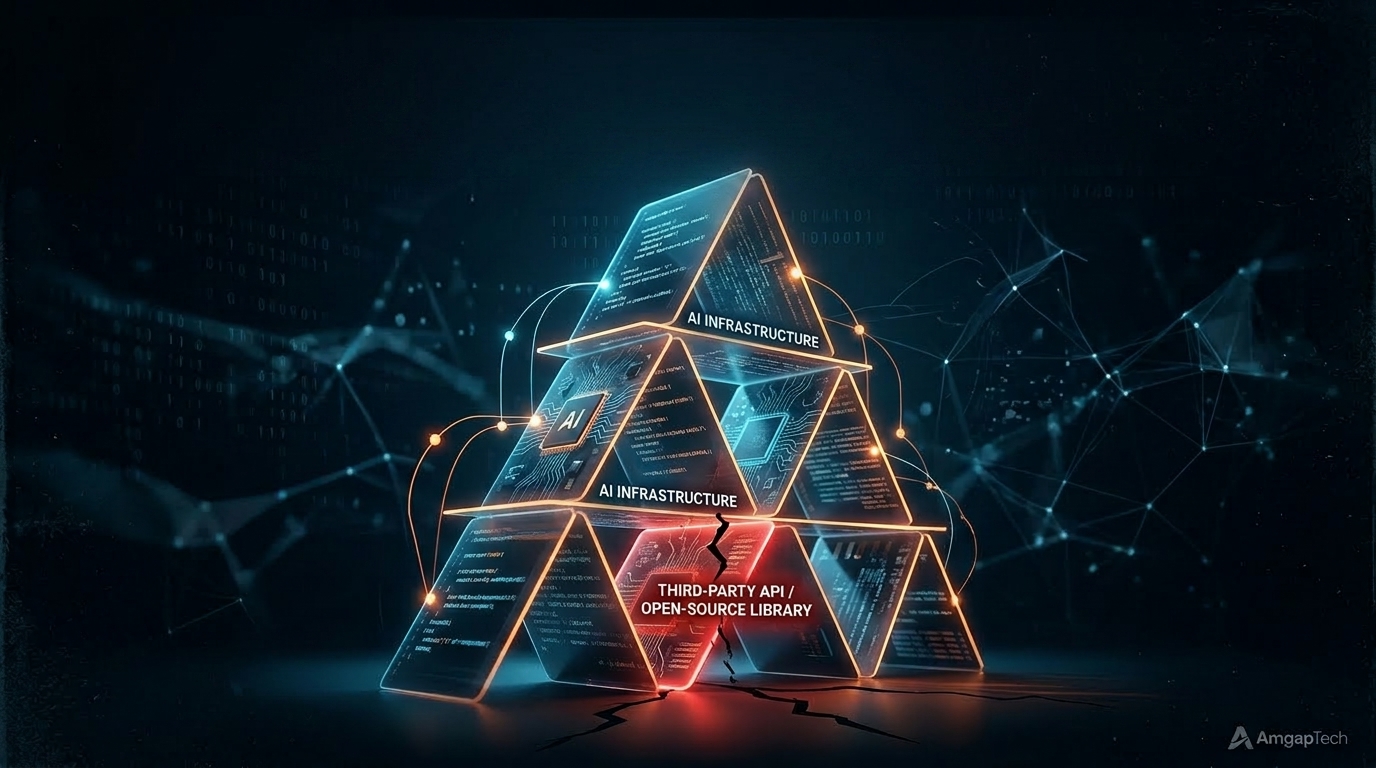
The Fragile Frontier: Why Your AI Strategy is Only as Strong as Your Weakest Dependency
In the scramble to ship AI-powered products, we’ve created a massive security blind spot. We are integrating third-party tools, open-source libraries, and experimental APIs at a breakneck pace. But as OpenAI recently discovered, your infrastructure is only as secure as the most obscure tool in your stack.
The "dark side" of AI development isn't just about the models going rogue; it’s about the boring, traditional vulnerabilities—supply chain hacks and legacy code—that are now being amplified by the speed of AI adoption.
OpenAI recently identified a security issue involving a third-party tool that compromised their internal systems. This is a classic supply chain attack. When you are the biggest target in the world, attackers don't always come through the front door (the model); they come through the "side door"—the monitoring tools, the payment processors, or the data labeling platforms you trust.
For engineers, the lesson is clear: Zero Trust is not optional. Every third-party integration must be treated as a potential breach vector. If a tool has access to your environment, it should have the absolute minimum permissions required to function. At AmgapTech, we’ve seen that "convenience" is often just a synonym for "vulnerability."
The stakes are even higher than we thought. Reports linking North Korean actors to a supply chain hack impacting OpenAI underscore that AI infrastructure is now a top-tier target for state-sponsored espionage.
These actors aren't looking for "chat history"—they are looking for the underlying architecture, training data, and proprietary weights. This isn't just a "bug" anymore; it’s a matter of national and corporate security. If you are building AI infrastructure, you are in the crosshairs of the world's most sophisticated hackers. Your CI/CD pipeline is now a battlefield.
There is a silver lining, but it’s a double-edged sword. Recently, Anthropic’s Claude uncovered a 13-year-old Remote Code Execution (RCE) bug in ActiveMQ within minutes—a bug that human auditors had missed for over a decade.
This highlights a fundamental shift:
The Good: AI can be the greatest security auditor we’ve ever had, cleaning up the "technical debt" of the last 20 years.
The Bad: The "bad guys" have the same AI. They are using these models to scan the entire internet for legacy vulnerabilities that were previously "security through obscurity."
The window between a bug being discoverable and being exploited has shrunk from months to seconds.
Here is the technical trade-off: Security takes time, and the AI market doesn't give you any. The pressure to "integrate AI" into everything means developers are skipping traditional security reviews. We are copy-pasting code from models without vetting it, and we are connecting our most sensitive data pipelines to experimental APIs.
The "Hard Truth" is that we are building 2026 technology on top of 2010 security protocols. We are moving too fast to be safe, and the OpenAI incident is just the beginning of a larger wave of "supply chain debt" coming due.
Security in the age of AI isn't a "feature" you add at the end; it’s the foundation you build on. The products that will survive the next five years won't be the ones that had the fastest "time to market" but the ones that had the most resilient supply chains.
At AmgapTech, we believe the path forward is AI-augmented security. We must use the very tools that threaten us to defend us—automating our audits, hardening our dependencies, and treating every line of code as a potential liability.
Are you building a revolutionary product or just a sophisticated target? The difference is in your dependencies.
Sources
Stay updated
Get our latest technical articles and product updates delivered to your inbox.